
The spine is the mast of the human body, bearing the entire body’s weight. With the advent of the information age, profound changes have taken place in people’s work and lifestyles. More and more people need to sit for long periods at desks. Coupled with rising social aging, spine-related disorders, such as cervical spondylosis, lumbar disc herniation, lumbar spinal stenosis, lumbar spondylolisthesis and scoliosis, have become common and prevalent conditions that impair people’s quality of life. Therefore, spinal disorders have become a hot topic of widespread public concern.
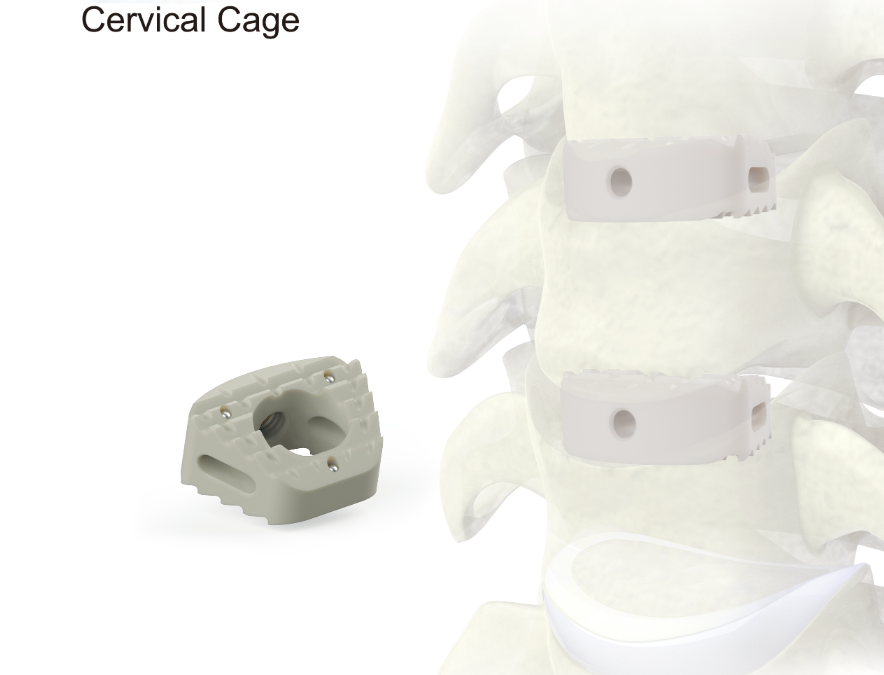
In the current medical field, interbody fusion surgery is a common therapeutic procedure in spinal surgery for a variety of spinal pathologies, including intervertebral disc degeneration, spinal deformity, spinal trauma and other related conditions. During the intervertebral fusion procedure, a cervical cage (Interbody Fusion Cage) is implanted into the native intervertebral space. Supported by the cervical fusion cage, the height of the intervertebral space is restored, the intervertebral foramen is enlarged, nerve compression is relieved, segmental stability is enhanced, and secondary degenerative changes in adjacent segments are prevented.
PEEK is currently the best material choice for spine fusion cages, replacing titanium to a certain extent and gaining wide recognition from orthopedic doctors.
Spinal Fusion Cage Advantages
Large Graft Window Design-Increases fusion rate and reduces subsidence rate.
Multi-Point Tantalum Marker Design- Multi-point tantalum marker placement facilitates confirmation of cage position before and after surgery.
Directional Grip Teeth Design-Effectively prevents cage migration between vertebral bodies.
Medical Grade Implantable PEEK Material-Elastic modulus similar to healthy bone, Radiolucent, Better structural integrity.
3D Curved Surface Design
Effectively disperses stress and maintains intervertebral balance
Restores normal cervical lordosis
Minimizes damage to the anterior vertebral body during implantation; anatomical design effectively reduces the risk of migration
Anterior Cervical Fusion Cage Indications:
Degenerative / Isthmic spondylolisthesis
Pseudoarthrosis or failed lumbar fusion
Degenerative disc disease and instability
Revision surgery after simple discectomy
Cervical Interbody Fusion Specifications:
Higher applicability; multiple heights provide options better suited to the patient’s anatomy
|
4×16×13/ 5×16×13/ 6×16×13/ 7×16×13/ 8×16×13/ 9×16×13 |
|
Length× Width × Height (mm) |
If you want to learn more about the Lumbar Fusion Cage knowledge, please feel free to contact us; our team will provide you with the professional support and answers.
Post time: Oct-27-2026